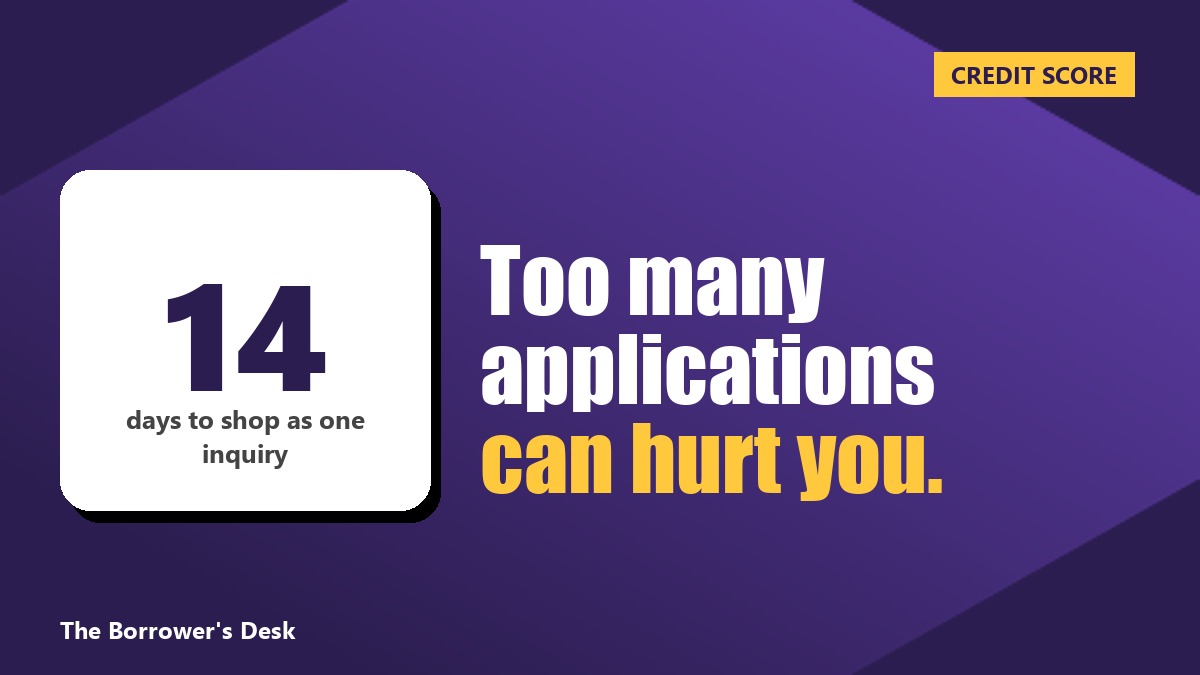
No rule sets a number, and one hard inquiry typically costs a FICO score fewer than five points. Clusters do the damage, like several card and loan applications in the weeks after a decline, outside a rate-shopping window. To the next lender that reads like someone getting turned down everywhere.
How much a cluster hurts depends on what kind of credit you applied for and how close together the applications were. Mortgage, auto and student loan shopping gets grouped, while card applications never are.
Hard and soft inquiries

A hard inquiry is recorded when you apply for credit and the lender pulls your report to decide. Other lenders can see it. A soft inquiry is recorded when you check your own credit, when a lender prequalifies you, or when a company pulls your file to mail you a preapproved offer. Soft inquiries don’t affect your score, as the Consumer Financial Protection Bureau explains on its page about credit inquiries.
The things that trigger a hard pull are mostly obvious: a credit card application (store cards included), a mortgage, auto, student or personal loan. A few aren’t. Some card issuers do a hard pull when you ask for a higher limit, and some landlords and phone carriers do one on an application. If you’re not sure, ask before you consent. They’ll tell you.
How many points does one inquiry cost?
For most people, fewer than five, according to myFICO. The hit is larger if you have only a few accounts or a short history, and it fades over the following months.

FICO scores only count hard inquiries from the past 12 months, but the inquiry stays on your report for up to two years. So a lender reading your file can still see it a year after it stopped costing you points. In FICO’s own breakdown of what’s in a score, new credit, which includes inquiries, is about 10% of the total. Payment history is about 35% and amounts owed about 30%. One late payment does more damage than a handful of well-timed applications, so apply for the loan you need and save the worry for when inquiries start piling up.
Rate shopping counts as one inquiry, within limits

Scoring models expect you to compare rates on big loans, so they group those inquiries. Newer FICO versions treat mortgage, auto and student loan inquiries within 45 days as a single inquiry, and the CFPB describes the same 45-day window for mortgage shopping. Older FICO versions use 14 days, and VantageScore uses a 14-day window as well. FICO also ignores those loan inquiries entirely for the first 30 days, so the rate search doesn’t drag down the very decision it’s part of.
Most people forget that the lender picks the scoring model, and many lenders still use older versions. Keeping applications of one type inside 14 days covers every version. Credit cards get no grouping at all. Every card application is its own inquiry, and personal loans are often treated the same way depending on how the lender reports them. That’s why prequalification matters more for personal loans than for anything else. Prequalification is an estimate based on a soft pull, and the rate can change when you formally apply. Preapproval, common with mortgages, is a conditional offer that usually does require a hard pull and documents like pay stubs. Compare with the first, and save the second for the lender you’ve picked.
A bad week of applications
Say someone gets declined for a personal loan on a Monday. By Friday they’ve applied to five more lenders and two credit cards. That’s seven new hard inquiries on top of the first one. The loans may not be grouped, and the cards definitely aren’t. Each later lender sees a report full of fresh applications, and whatever caused the first decline is still there.
The same person could have read the reason on the first decline letter, prequalified with five lenders on soft pulls, and submitted one application. Their report would show two inquiries instead of eight.
What the next lender sees is thin. An inquiry line shows the company that pulled your credit and the date. It doesn’t show whether you were approved, what product you wanted or how much you asked for. So a lender can’t tell an approval from a decline, only the timing. Three inquiries spread across a year look normal. Three in one week with no new accounts showing up afterward invite the question of why everyone else said no.
Applying without stacking them up

Start with your own reports at AnnualCreditReport.com, which gives free reports from all three bureaus and counts as a soft inquiry. Do it a week or two before you plan to apply. If something there is wrong, a dispute started then has time to finish inside the bureau’s 30-day investigation period before a lender looks.
Then prequalify with several lenders and compare the quotes. When you’re ready, put your real applications inside the same two weeks. For cards, leave months between applications if you can; six is a reasonable gap. Nothing official sets a waiting period. After a decline, fix the reason before you apply again, since the same file sent to a new lender tends to get the same answer plus one more inquiry. If a mortgage is coming up, keep new applications to a minimum for several months beforehand so the underwriter sees a quiet report.
An inquiry you don’t recognize
An unfamiliar hard inquiry can mean someone applied for credit in your name. Call the company listed. If you didn’t apply, dispute the inquiry with the bureau that shows it and think about freezing your credit. A freeze is free to place and lift at all three bureaus, stops most new lenders from pulling your report until you lift it, and doesn’t affect your score, according to the FTC’s page on credit freezes and fraud alerts.
Checking your own reports or score is a soft pull, so you can look as often as you like and no lender will ever see it.
Related reading
- Prequalified for a Personal Loan? What That Offer Does and Does Not Mean
- Your Loan Was Denied. What the Letter Tells You and What to Do Next
- Credit Freeze, Fraud Alert or Credit Lock: Which One Do You Need?
Rate-shopping windows depend on which FICO or VantageScore version the lender pulls, and the lender picks it. Ask which score it uses, and look at your reports on AnnualCreditReport.com before you apply.

Leave a Reply