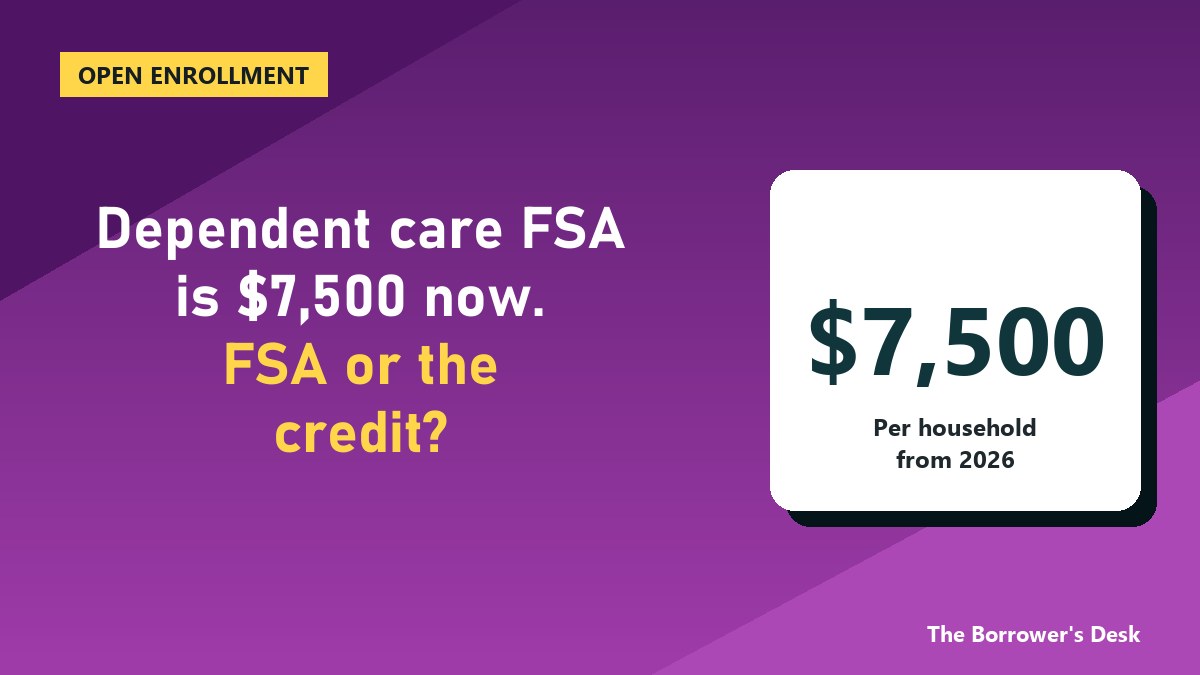
If you pay for day care, preschool, after school care or summer day camp, the dependent care FSA at work got bigger this year. The 2025 tax law raised the limit from $5,000 to $7,500 per household starting in 2026, the first permanent increase in decades. Congress allowed $10,500 for 2021 only. At the same time, the child and dependent care credit got richer for many families.
That changes the math for the choice a lot of parents make during open enrollment this month: put money in the FSA, or skip it and take the credit. This guide covers the new limit, the year end deadlines for this year’s account, and how to compare the two before you lock in your 2027 election.
The rules for 2026 and 2027

A dependent care FSA, which employers sometimes call a dependent care assistance program, lets you set aside part of your pay before tax to cover care costs. Under section 129 of the tax code, as amended by the 2025 law:
- The limit is $7,500 per household, or $3,750 if you are married and file separately. It is not adjusted for inflation, so it stays $7,500 in 2027 unless Congress changes it.
- It is per household, not per parent. If both spouses have an FSA at work, the combined total still cannot exceed $7,500.
- The money skips three taxes. Contributions avoid federal income tax and, under IRS Publication 15-B, Social Security and Medicare tax too. Most states also exclude it.
- You cannot exclude more than you earn. For a married couple, the cap is the lower of the two spouses’ earned income. A spouse who is a full time student or cannot care for themselves is treated as earning $250 a month, or $500 with two or more qualifying people.
- Qualifying people are children under 13 and a spouse or dependent who cannot care for themselves and lives with you for more than half the year.
One catch: $7,500 is a maximum, not an automatic raise. Your employer’s plan sets its own limit, and some plans still cap elections at $5,000. Check the number in your benefits portal before you assume.
The credit got better too
The child and dependent care credit pays a percentage of up to $3,000 of care costs for one qualifying person, or $6,000 for two or more. Those expense limits did not change. The percentage did. Starting in 2026, under section 21 as amended:
- The rate starts at 50% for AGI of $15,000 or less.
- It drops 1 point for each $2,000 of AGI above $15,000, down to 35%, which it reaches at about $45,000.
- It stays at 35% until AGI passes $75,000, or $150,000 for joint filers.
- Above that, it drops 1 point for each $2,000, or each $4,000 on a joint return, down to a floor of 20%.
For a married couple with two children and AGI between $45,000 and $150,000, the credit is now worth up to $2,100 a year, up from $1,200 under the old 20% rate. Our child and dependent care credit guide has the full table.
Why you usually cannot have both
Here is the rule that decides most cases. Every dollar you run through the FSA reduces the expenses the credit can use, dollar for dollar. With two children, the credit’s limit is $6,000. Put $7,500 in the FSA and the credit’s limit drops to zero, even if you spent $20,000 on day care.
So the real choice for most families is the full FSA or the full credit.
How the two compare

The FSA saves you your income tax rate plus 7.65% for Social Security and Medicare, on up to $7,500. The credit saves its percentage on up to $6,000, or $3,000 with one child. These examples use federal tax only and assume care costs of at least $7,500.
Married, two children, AGI $150,000, 22% bracket. The FSA saves about 29.65% of $7,500, or $2,224. The credit is 35% of $6,000, or $2,100. The FSA wins by a little, and by more once state income tax is counted.
Married, two children, AGI $250,000, 24% bracket. The credit rate has fallen to 20%, so it is worth $1,200. The FSA saves about 31.65% of $7,500, or $2,374. The FSA wins easily.
Married, one child, AGI $120,000, 12% bracket. The credit is 35% of $3,000, or $1,050. The FSA saves about 19.65% of $7,500, or $1,474. The FSA wins because the credit only counts $3,000 for one child.
Lower incomes are different. The credit is not refundable. It can only reduce income tax you owe. A family whose tax is already wiped out by the child tax credit gets nothing from it, no matter the rate. For them the FSA still saves the 7.65% payroll tax and any state tax, which is real money even with no federal income tax. If you owe little or no income tax, the FSA is usually the better choice, but a tax preparer can check how it changes your earned income credit, which depends on your income.
Very high earners should know one more thing. If you are a highly compensated employee, which for 2026 means pay over $160,000 last year or owning more than 5% of the company, your plan may cut your election late in the year if it fails the federal nondiscrimination tests.
What to do before December 31
Spend this year’s balance. Dependent care FSAs are use it or lose it. Unlike health FSAs, they cannot carry money into the next year. Some plans add a grace period of up to two and a half months to incur expenses, and most give you time into the new year to submit claims, but money left after that is forfeited. Check your plan’s deadline and send in receipts for care already provided. For the health side, see our guide to spending your FSA before the deadline.
Make your 2027 election during open enrollment. For most employers that window is open now or closes in the next few weeks. After it ends, you can only change the election with a qualifying event, such as a birth, a new job, a child turning 13, or a change in your care provider or its cost. Price increases by a relative who provides care do not count.
Elect what you will spend. Count your care costs for the year, including summer day camp, and subtract weeks you will not need care. Overnight camp, kindergarten tuition and private school do not qualify.
If you are married, coordinate. If both of you have plans at work, split the $7,500 however you like, but do not go over it combined. Excess contributions become taxable.
Keep the provider’s tax ID. You need the care provider’s name, address and taxpayer identification number to file Form 2441 with your return. That applies to the FSA, the credit, or both.
Bottom line
For 2026 and 2027, a dependent care FSA can shelter up to $7,500 from income and payroll tax, and for most working families with care costs above that, it beats the child and dependent care credit, even after the credit’s increase. Families who owe little or no income tax should still use the FSA for its payroll tax savings. Check that your employer offers the $7,500 limit, spend this year’s balance before your plan’s deadline, and set your 2027 amount before open enrollment closes.
Official sources: IRS Publication 15-B, IRS Publication 503.
Figures come from 26 USC 129 and 21 as amended by Public Law 119-21, IRS Publication 15-B for 2026, and IRS guidance on cafeteria plans. Examples are estimates and do not include state tax. This is general information, not tax advice.

Leave a Reply